
To pay off a line of credit faster, you must attack the principal balance directly through bi-weekly payments, freeze new draws, and eliminate variable interest before daily charges add up.
However, holding a balance for too long can quickly become an expensive trap. Because interest is charged on the outstanding balance, keeping the debt open drives up your total costs over time.
The good news? You do not have to stay stuck paying endless interest. With the right payoff strategy, you can cut down your principal balance faster, save hundreds of dollars in interest, and regain total control of your money.
Stop Falling for the “Minimum Payment” Trap
One of the biggest mistakes many borrowers make is paying only the minimum amount due on their monthly statement. It feels like you are making progress, but in reality, you are barely moving the needle.
When you pay just the minimum, most of your money goes straight toward the monthly interest and bank fees. Your actual balance (the principal) barely drops. As a result, the next month’s interest is charged on almost the exact same amount. This is why people can make payments for years and still feel like their debt isn’t going anywhere.
A Quick Real-World Example
Imagine you have a $3,000 balance on a credit card or line of credit with an 18% APR.
If you only pay the minimum required (around 2% to 3%), the majority of that payment just covers the interest charges.
At that rate, it could take you over 10 to 15 years to clear the debt completely.
By the time you are done, you will have paid thousands of dollars extra in interest alone—far more than what you originally borrowed.
The Smarter Fix: Always Pay Above the Minimum
The easiest way to break free from this cycle is simple: always pay more than the minimum due.
Even an extra $50 or $100 every month makes a massive difference because that extra cash goes directly toward reducing your principal balance. When your principal goes down faster, less interest is charged next month—helping you become debt-free years ahead of schedule and keeping serious money in your pocket.
Use the Bi-Weekly Payment Hack to Sneak in an Extra Payment
The bi-weekly payment strategy is one of the simplest yet most powerful hacks to clear debt ahead of schedule.
Normally, most people make 12 monthly payments a year. But if you take your regular monthly payment, split it in half, and pay that half every two weeks (every 14 days), you will make 26 half-payments over the course of a year.
26 half-payments = 13 full monthly payments.
Without changing your lifestyle or overhauling your budget, you effortlessly make one full extra payment every single year just by shifting your payment schedule.
How Much Can This Simple Shift Save You?
Because interest on lines of credit and loans compounds frequently, that extra payment goes straight toward crushing the principal balance faster.
- Shorter Loan Term: On long-term balances or personal loans, this simple switch can shave years off your payoff timeline.
- Massive Interest Savings: By constantly keeping the principal lower throughout the year, you save hundreds (and often thousands) of dollars in total interest charges.
Perfect for Bi-Weekly Paychecks
This method works seamlessly if you get paid every two weeks—which is standard for most US workers. Aligning your debt payments with your payday makes budgeting automatic: money goes toward your debt before you even have a chance to spend it.
Pro Tip / Word of Caution:
Before setting this up, call your bank or lender to confirm two things:
They support true bi-weekly payment processing (rather than holding the first half-payment until the end of the month).
The extra amount is applied directly to the principal balance, and not credited as an advance payment for the next billing cycle.
Choose the Right Payoff Strategy
Once you decide to pay more than the minimum, the next big question is: Where should that extra cash go first?
If you have multiple balances across credit cards, personal loans, or lines of credit, throwing money at them randomly won’t get you far. You need a structured attack plan.
The two most popular payoff strategies are the Debt Avalanche and the Debt Snowball. Let’s break down the method that saves you the absolute most money mathematically:
The Debt Avalanche Method: Save the Maximum on Interest
The Debt Avalanche method is laser-focused on one goal: destroying the most expensive debt first.
Here is how it works step-by-step:
List all your debts: Rank them in order of interest rate (APR)—from highest to lowest—regardless of the balance amount.
Pay the minimums: Continue paying the required minimum amount on all your accounts so your credit score stays healthy.
Attack the highest APR: Put every single dollar of your extra budget toward the balance with the highest interest rate.
Roll it over: Once that most expensive debt hits zero, take everything you were paying toward it and roll that entire amount into the next highest-interest debt on your list.
Just like a snowball rolling into an unstoppable avalanche, your payments grow bigger and wipe out remaining debts faster with each balance you eliminate.
Why the Avalanche Method Works So Well
- Mathematically Superior: By killing high-APR debt first (like credit cards with 24%+ rates), you stop expensive interest from compounding. This saves you the maximum amount of money over time.
- Faster True Debt Freedom: Less money wasted on interest means more of your cash directly reduces your principal.
The Only Catch: It Requires Patience
Because your highest-interest balance might also carry a large balance, it can take several months to get your first “win” (fully paying off an account).
Who is this best for?
The Debt Avalanche is perfect for analytical, numbers-driven people who stay disciplined and care more about saving total dollars than getting quick psychological wins.
The Debt Snowball Method: Build Fast Momentum and Motivation
The Debt Snowball method takes the exact opposite approach to the Avalanche. Instead of focusing on interest rates, you organize your debts entirely by balance size—from smallest to largest.
Here is the simple step-by-step game plan:
List all your debts from smallest to largest balance: Ignore the interest rates (APRs) completely for now.
Pay the minimums: Keep paying the regular minimum amount on all your larger accounts to stay current.
Attack the smallest balance: Throw every extra dollar you have at the absolute smallest balance until it hits zero.
Snowball the payment: Once that first small balance is gone, take everything you were paying toward it and add it to the minimum payment of the next smallest debt.
With every account you wipe out, your monthly payment “snowball” grows larger and knocks out the next balance even faster.
Why the Snowball Method Works: The Power of Quick Wins
Paying off debt is not just about math—it is about human psychology and behavior.
Instant Motivation: Knocking out a small $400 medical bill or $600 department store card in just a couple of months gives you a massive psychological boost.
Visible Progress: Crossing whole accounts off your list proves to your brain that the plan is actually working, keeping you motivated instead of burning out halfway through.
The Trade-Off: A Little More in Total Interest
Because you might pay off low-interest accounts before tackling a high-APR credit card, you technically pay slightly more in total interest compared to the Avalanche method.
Who is this best for?
The Debt Snowball is the ultimate choice if you need quick momentum, visible results, and consistent motivation to stay committed to your debt-free journey.
Quick Comparison: Avalanche vs. Snowball
| Strategy | Primary Focus | Best Advantage | Best Suited For |
|---|---|---|---|
| Debt Avalanche | Highest APR (e.g., 22%–28%) | Saves the maximum money | Analytical, disciplined savers |
| Debt Snowball | Smallest Balance (e.g., $500 balance) | Delivers fast psychological wins | Anyone needing quick momentum |
Freeze Your Draw Period to Stop the Leaks
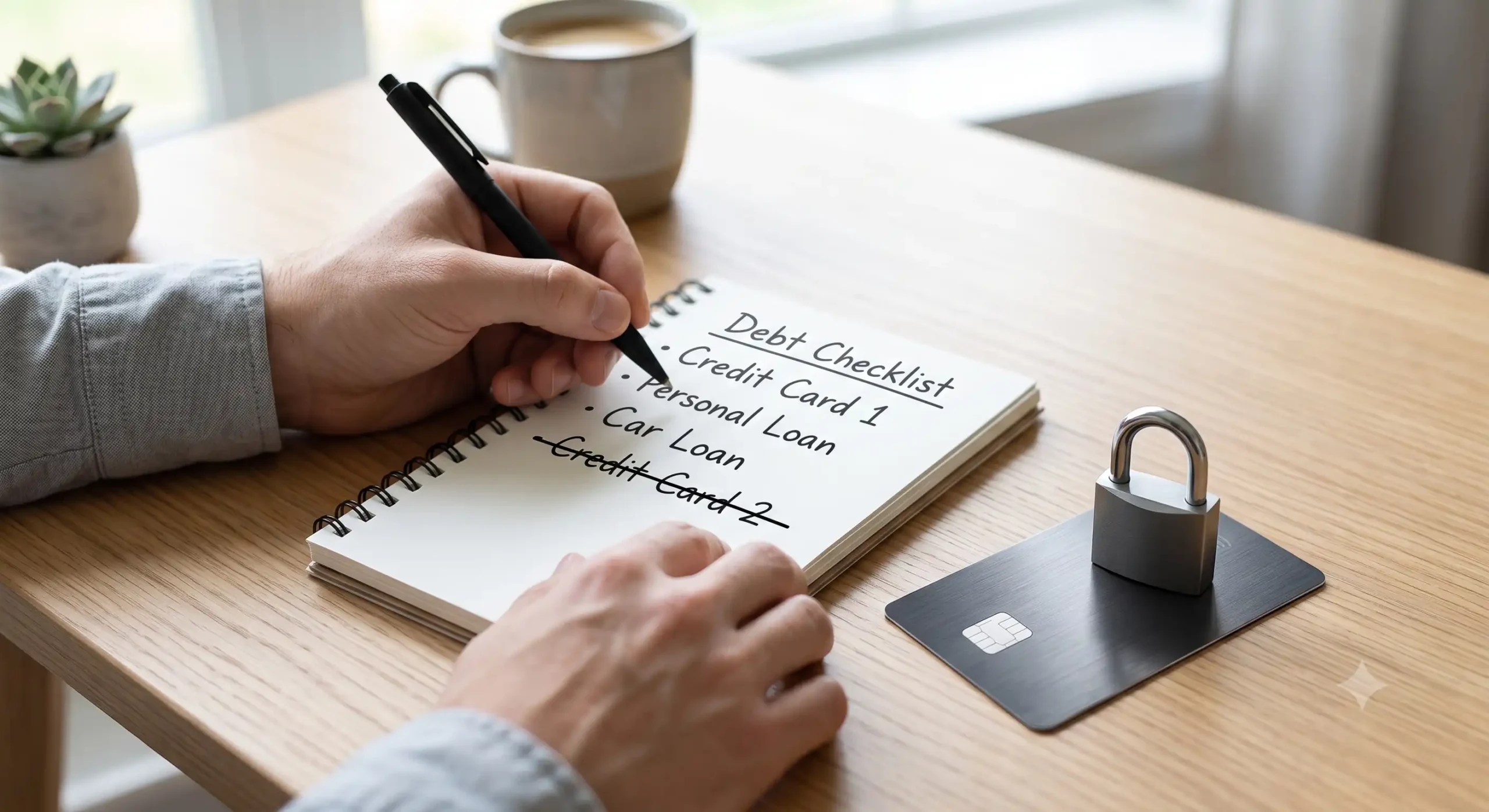
One of the most frustrating debt traps is paying down an account with one hand while continuing to pull money out with the other.
This happens all the time with revolving lines of credit, especially a HELOC (Home Equity Line of Credit) or a personal line of credit. During the active “draw period,” you can borrow against your credit limit whenever you want. While that flexibility is convenient, it also keeps constant temptation right at your fingertips.
The Two-Steps-Forward, One-Step-Back Trap
Imagine you pulled $25,000 from your HELOC to remodel your kitchen. You buckle down, budget hard, and start throwing $800 every month toward the principal balance.
Then, a few months later:
Your car needs a repair.
You plan a quick weekend getaway.
You see an “available balance” on your credit line and withdraw $3,000.
Just like that, three to four months of hard-earned progress vanishes instantly. Your balance shoots back up, and you are right back where you started.
How to Create “Friction” and Freeze Your Line of Credit
To truly break the cycle, you must practically freeze your draw access while in active payoff mode:
Ask your lender to freeze draws: Contact your bank or loan servicer and ask if they can temporarily disable additional draws on your account while you focus on paying it off.
Lock or freeze the card in your app: Most mobile banking apps allow you to lock the associated debit/credit card with a single tap.
Remove saved payment details: Delete the line of credit account from online shopping sites (like Amazon), digital wallets (Apple Pay/Google Pay), and recurring subscription services.
Physically hide the card: Put the actual card away in a locked drawer or high cabinet.
The Behavioral Hack:
The easier it is to access credit, the more likely you are to make impulsive financial decisions. By adding just a few steps of friction between your urge to spend and your credit line, you give yourself the pause needed to stick to the plan: Out of sight, out of mind.
Lock in Stability with a Fixed-Rate Consolidation Loan
Adjusting your repayment schedule and building discipline will get you far. However, sometimes the real issue is out of your direct control: a variable interest rate.
Most credit cards and HELOCs carry variable APRs tied to the Federal Reserve’s benchmark rate. When market rates climb, your interest rate jumps too. Suddenly, your monthly minimum payment spikes—even if you haven’t swiped your card once.
This is where a fixed-rate debt consolidation loan becomes a game changer.
What Is a Fixed-Rate Consolidation Loan?
Debt consolidation simply means taking out a single personal loan with a fixed interest rate and using that money to pay off all your scattered, variable-rate debts at once.
Instead of juggling multiple due dates and worrying about sudden rate hikes, you get:
- One fixed monthly payment: Your payment never changes from month to month.
- A set payoff date: You know the exact month and year you will be 100% debt-free.
- Lower total interest: Personal loans generally offer significantly lower interest rates than high-APR credit cards, especially if you have a good credit score.
A Quick Example: How Consolidation Simplifies Your Life
Imagine you are managing three separate credit cards with a combined balance of $10,000 at an average variable APR of 24% to 28%.
By taking out a $10,000 fixed-rate personal loan at 11% APR, you immediately wipe out all three credit cards.
Instead of tracking three different due dates with unpredictable monthly charges, you now have just one predictable payment at a much lower interest rate—saving you thousands in finance charges over the life of the loan.
The Golden Rule: Avoid the “Double Debt” Trap
A consolidation loan treats the symptom, but your daily habits fix the problem. The most dangerous mistake people make is consolidating their balances and then running up their newly cleared credit cards again.
If this happens, you end up with double the debt: the monthly consolidation loan payment plus brand-new credit card bills.
To keep this from happening:
- Keep the cards frozen: Just as covered in the previous step, lock your zeroed-out cards or delete them from digital wallets.
- Watch out for fees: Check for origination fees or prepayment penalties before signing the loan agreement to ensure the upfront costs don’t wipe out your interest savings.
Frequently Asked Questions (FAQs)
Q: Is a line of credit harder to pay off than a personal loan?
A: Yes, it can be harder simply because a line of credit often requires only interest payments and allows you to keep borrowing funds. A personal loan forces you to pay fixed principal and interest every month until it hits zero.
Q: Should I close my line of credit after paying it off?
A: In most cases, Keep the paid-off account open with a $0 balance to maintain your high available credit limit and protect your credit score over the long run.
Final Thoughts: Take Control of Your Debt Today
Becoming debt-free is rarely an overnight fix, but the right strategy can easily shave years off your repayment timeline and save you thousands of dollars in unnecessary interest charges.
Whether you decide to:
- Pay extra toward the principal balance,
- Use the bi-weekly payment schedule hack,
- Pick between the Debt Avalanche or Debt Snowball methods,
- Freeze your credit line to eliminate temptation, or
- Lock in a stable, fixed-rate consolidation loan
Every single tactic helps move the needle. When you combine two or more of these habits, the compounding effect is massive.
Pingback: Accredited Debt Relief Complaints: 4 Hidden Risks